


Knee Arthroscopy Equipment: Essential Instruments Every Surgical Team Needs
- Author
- May 21
- 5 min read
Knee arthroscopy has transformed orthopedic surgery by enabling minimally invasive diagnosis and treatment of joint disorders. Compared to traditional open surgery, arthroscopy offers smaller incisions, reduced pain, shorter hospital stays, and faster recovery times. As knee injuries and degenerative joint conditions continue to rise globally, the demand for efficient and precise arthroscopic procedures has become increasingly important.
However, the success of knee arthroscopy does not rely solely on surgical expertise. Having the right equipment and instruments available in the operating room is equally critical. Every surgical team must understand which tools are essential to ensure precision, patient safety, and procedural efficiency.
This article explores the essential knee arthroscopy equipment every surgical team needs, highlighting the key instruments that support smooth procedures and optimal patient outcomes.

Understanding Knee Arthroscopy
Knee arthroscopy is a minimally invasive surgical procedure used to diagnose and treat conditions inside the knee joint. Surgeons commonly use this procedure to address problems such as:
Meniscus tears
Ligament injuries, including ACL tears
Cartilage damage
Synovitis
Loose bone or cartilage fragments
Knee inflammation and chronic pain
During the procedure, surgeons make small incisions around the knee to insert an arthroscope a specialized camera that provides a detailed view of the internal structures. Small surgical instruments are then used to repair or remove damaged tissues.
Because the procedure requires precision in confined spaces, selecting the right arthroscopy equipment is essential for achieving successful outcomes.
Essential Knee Arthroscopy Equipment Every Surgical Team Needs
1. Arthroscope
The arthroscope is the centerpiece of any knee arthroscopy procedure. It is a thin, tube-like instrument equipped with a high-definition camera and light source that enables surgeons to visualize the inside of the joint.
Modern arthroscopes provide clear, magnified images, allowing orthopedic surgeons to identify damaged tissues with exceptional accuracy.
Different viewing angles are available, including:
30-degree arthroscopes (most commonly used)
70-degree arthroscopes for difficult-to-view areas
A high-quality arthroscope ensures improved visualization, helping surgeons perform complex procedures more safely and efficiently.
2. Camera System and Video Monitor
A reliable camera system is vital for successful knee arthroscopy. The camera attaches directly to the arthroscope and transmits live images to a high-definition monitor in the operating room.
Essential features include:
HD or 4K imaging capability
Excellent color accuracy
Minimal latency
Enhanced tissue visualization
Large surgical monitors improve team coordination by allowing assistants and nurses to observe the procedure in real time.
Clear visualization reduces surgical errors and enhances precision during ligament reconstruction, meniscus repair, and cartilage restoration procedures.
3. Light Source and Fiber Optic Cable
Inside the knee joint, visibility can be limited due to the confined surgical space. A powerful light source is therefore necessary to illuminate the joint cavity.
Most modern arthroscopy systems use LED or xenon light sources paired with fiber optic cables.
Benefits include:
Better visualization of soft tissue structures
Improved identification of cartilage defects
Reduced eye strain for surgeons
A consistent and bright light source helps surgical teams maintain procedural accuracy throughout the operation.
4. Fluid Management System
Maintaining a clear surgical field is essential during knee arthroscopy. A fluid management system helps distend the joint and flush away blood and debris to improve visibility.
This system typically includes:
Arthroscopy pumps
Saline inflow and outflow tubing
Pressure control systems
Proper fluid management prevents clouded visualization and minimizes complications caused by excessive swelling or poor pressure control.
A dependable fluid management setup supports smoother procedures and reduces operating time.
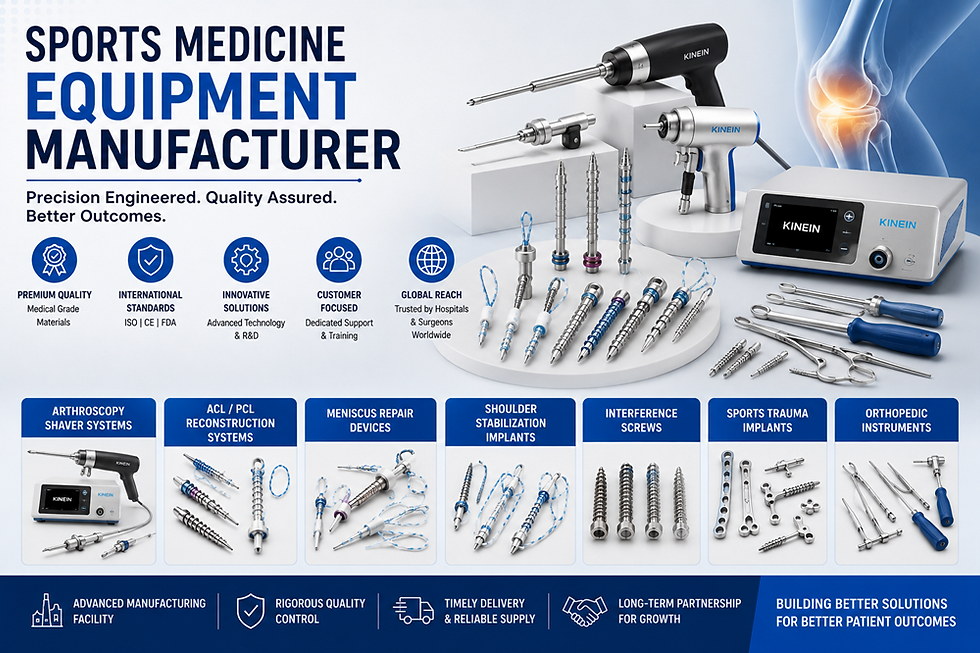
5. Arthroscopic Shaver System
The arthroscopic shaver is one of the most frequently used instruments in knee procedures. It is designed to remove damaged soft tissue, cartilage, and loose fragments from the knee joint.
Shaver systems typically consist of:
Handpiece
Motorized console
Disposable or reusable blades
Common uses include:
Debridement of damaged cartilage
Removal of inflamed synovial tissue
Meniscal trimming
Precision shavers help surgeons work more efficiently while minimizing unnecessary trauma to surrounding tissues.
6. Radiofrequency Ablation Devices
Radiofrequency (RF) devices are increasingly used during knee arthroscopy for tissue management and bleeding control.
These instruments assist surgeons by:
Controlling bleeding
Smoothing damaged cartilage
Removing soft tissue
Treating synovitis
RF probes improve visibility by minimizing bleeding during procedures and can reduce overall operating time.
When used properly, they provide a more controlled and precise surgical environment.
7. Arthroscopic Hand Instruments
Although powered tools play a major role, manual hand instruments remain essential for knee arthroscopy.
Key instruments include:
Graspers: Used for holding or retrieving loose tissue fragments.
Scissors: Help cut soft tissues with precision.
Probes: Allow surgeons to assess cartilage damage and ligament integrity.
Punches and Biters: Used for trimming damaged meniscus tissue.
Curettes: Assist in preparing bone surfaces during repair procedures.
These instruments provide tactile feedback, helping surgeons make precise adjustments during surgery.
8. Cannulas and Trochars
Cannulas and trochars create access portals for arthroscopic instruments.
Trochars are sharp instruments used to enter the joint safely.
Cannulas maintain access and allow smooth instrument exchange throughout the procedure.
Proper portal management reduces tissue trauma and improves procedural efficiency.
Different sizes may be required depending on the type of surgery being performed.
9. Suction and Irrigation Equipment
Efficient suction and irrigation systems are necessary to maintain a clear surgical view.
These systems help:
Remove debris and blood
Improve visualization
Reduce contamination risk
Maintain procedural cleanliness
Poor irrigation can negatively affect visualization and prolong surgery, making dependable systems essential for every operating room.
10. Meniscus Repair Instruments
Meniscus injuries are among the most common reasons for knee arthroscopy.
Specialized repair instruments may include:
Suture passers
Meniscus repair devices
Needles and anchors
These tools help surgeons repair torn tissue rather than remove it, preserving knee function and reducing long-term complications such as osteoarthritis.
Having dedicated meniscus repair equipment readily available improves procedural flexibility.
11. ACL Reconstruction Instruments
Anterior cruciate ligament (ACL) injuries frequently require arthroscopic reconstruction.
Essential ACL instrumentation includes:
Drill guides
Reamers
Tunnel preparation systems
Graft passing devices
Fixation systems
Precision is especially important during ACL surgery, as improper tunnel placement can affect long-term stability and outcomes.
High-quality instrumentation helps surgical teams maintain consistency and accuracy.
12. Powered Surgical Instruments
Powered instruments improve efficiency and reduce surgeon fatigue.
Common powered tools include:
Motorized drills
Burr systems
Oscillating tools
These instruments are commonly used during:
Bone reshaping
Tunnel creation
Cartilage treatment
Reliable powered systems can significantly improve workflow in high-volume orthopedic centers.
13. Sterilization and Instrument Trays
Maintaining instrument sterility is critical for infection prevention.
Dedicated arthroscopy trays help organize equipment and improve operating room efficiency.
Benefits include:
Faster instrument access
Reduced setup errors
Improved workflow consistency
Sterile processing protocols should always align with hospital standards and manufacturer recommendations.
Factors to Consider When Choosing Knee Arthroscopy Equipment
Selecting knee arthroscopy equipment requires more than simply purchasing instruments. Surgical teams should consider several factors:
Quality and Durability: High-quality instruments reduce replacement costs and improve reliability during procedures.
Compatibility: Ensure all equipment integrates smoothly with existing operating room systems.
Surgeon Preference: Different surgeons may prefer specific instrument styles or viewing systems.
Ease of Sterilization: Reusable instruments should support efficient cleaning and sterilization processes.
Technological Advancements: Modern innovations such as HD imaging and improved fluid management systems can significantly improve procedural performance.
Why Proper Equipment Matters in Knee Arthroscopy
Using the right equipment contributes to:
Better surgical precision
Reduced operation time
Improved patient outcomes
Lower complication rates
Faster patient recovery
Even highly experienced surgeons depend on reliable instruments to maintain procedural accuracy.
Incomplete or outdated setups can increase procedural challenges and compromise efficiency.
Conclusion
Knee arthroscopy plays a vital role in modern orthopedic care, but successful procedures depend on having the right equipment. Instruments such as arthroscopes, imaging systems, shavers, and repair tools help ensure precision, efficiency, and better patient outcomes. As technology advances, staying equipped with modern arthroscopy instruments remains essential for effective knee treatment.

Comments